
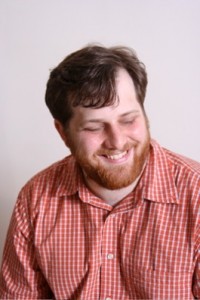
We are thrilled to announce that poet Craig Morgan Teicher joined the TLR team as a Poetry Editor this year alongside Renee Ashley. Former Assistant Editor and poet, Ryan Romine, talks to Craig:
First, let’s talk about one of the more dominant trends I noticed in some of your work: repetition. In many of your poems (Voice, Money Time, A Cure for Dead Dogs, among others) there are various levels and forms of repetition; be it with cliché phrases, individual words, or even the subtle over-use of pronouns (as in Nights). You seem to be playfully drawn to repetition in a variety of ways; what do you find particularly alluring about repetitive structures?
I’m very taken with the idea that a poem’s first reader is its writer, as the writer is sitting above the piece of paper, or across from the screen, on which the poem first takes shape, and reading it as it makes its way down the page, as it becomes a whole poem, as it is, for the first time, a complete art object. Which is to say it seems to me that most poems are addressed, first and foremost, to the people who write them. Certainly mine are, and I find that, when I write poems, it’s usually because I’m desperate to convince myself of something, to make myself believe that whatever the poem is saying is either an absolute fact or an absolute impossibility. So, what’s the most basic way to convince someone of something? Repeat it again and again, reassuringly, insistently, irritatingly. My poems are always repeating things in the hope that, one day, they’ll stick. Of course, if we have to work that hard to convince ourselves of something, it’s probably because we know it’s not true…
Was your inclination toward repetition influenced or sparked by a particular poet or writer?
I can’t think of one particular poet, but Bishop is always repeating herself, undercutting herself, taking things back and then saying them again a little later: “One Art” has been an important poem for me for as long as poems have been important to me. The same with Robert Lowell, who rewrote the same sonnets for two decades. And Berryman, who wrote way more dream songs in the exact same form than we’ll ever need. And then I love newer and very new obsessive poets: Louise Gluck, Frank Bidart, Bin Ramke, Jorie Graham, Henri Cole, Dana Levin, Karen Volkman, Thomas Sayers Ellis, Martha Ronk, Richard Siken, and lots and lots of others-all writers who, in very different ways, can’t let up on themselves, can never take their own word for it, can’t stop looking for new ways of re-telling themselves the things they need to be true.
How do you approach the writing process? Are you a person who follows a strict schedule or do you write at different points throughout the day/week as the impulse strikes you? Why do you think this method works for you?
Well, I’m the kind of writer who doesn’t need to sit at a desk for hours every day to write things. I write in lots of short sessions whenever I can, pretty regularly. I find 20 minutes a few days a week, and then maybe a couple hours at a time on the weekends. I have two small children, so they are in charge of the family calendar. But I remember when I was little there used to be this set of study tips on tape that my parents bought me called “Where There’s A Will There’s An A,” and the guy who made these tapes had this idea about taking lots of breaks because, he said, our concentration is strongest at the beginning and end of a session of work. I think that’s how I write-lots of short spurts. Also, I can’t really write unless I’m deeply engaged in reading, usually poetry. Good things tend to come when I’m in the middle of a book I love. Writing and reading aren’t separate activities for me.
I imagine your approach to the writing process differs somewhat between prose and poetry (or maybe it doesn’t), can you elaborate on these differences?
Most of the prose I write is work-for-hire: I do a lot of book reviews and short essays about literature usually for general interest publications, meaning I’m trying to explain how to read poetry to an audience less familiar with poetry than I am-or, if I do it right, this kind of prose should be engaging both to poetry people and to readers who don’t always sleep with a book of poems on their night table. So I tend to be pretty methodical and plodding about the prose: I have a due date and work for a couple of hours at a time in the week or two before the due date and just get it done, hammering at the paragraphs until they aren’t terrible. With poems, there’ s no due date so I just amble along until it gets somewhere surprising.
What clues do you look for when working on a poem that indicate to you that the poem might be “done”? I ask this especially in light of your technique of repetition; because your poems feel playful in their use of repetition, I imagine there’s a sense that you could play with the combinations and implications indefinitely … is that accurate?
Of course Valery is right that a poem is never finished, only abandoned. But I wonder if it’s often the case for poets that poems are abandoned when the poet gets tired of moving commas around. Well, that’s not quite fair. But poems are only fun when they’re unfinished, when there’s a bit-or a lot-of fixing to do. I tend to blurt out a lot of text at the beginning, which I liken to a sculptor buying a block of clay, and then chip away at if bit by bit for a few weeks until I’ve got something that just has a few misplaced commas or words. Then I move those around for a while until it’s not fun anymore or until something new comes up. But it’s really fun when I end up working in form, something I’ve been enjoying over the past couple of years-lots of rhymed sonnets and villanelles in my next book. Most times I don’t know a poem is going to work its way into form, then suddenly that’s the only way to go. Like with “Money Time,” which you mention above. It’s essentially in terza rima, though instead of rhymes, each line had to alternate ending with the word “money” or “time.” Writing it ended up being a matter of moving, twisting, and deleting phrases to get all of it into sentences. It was like a little puzzle I’d made for myself and then had to solve. That’s when I’m happiest writing poetry.
What prompted you to start writing poetry? What were the circumstances that led you toward that illustrious/perilous decision? What poets were you reading and being most deeply affected by when you decided that writing verse was one of the things you most wanted to do?
Oh dear. Well, I started writing poems seriously, with a kind of teenage seriousness, at 14. Poetry, though I didn’t know it at the time, was the quickest way out of the hell that was my teenage years. Now, it’s the only way back: when we’re that age, all we want is the be older, then, of course, we feel like we missed something back then, because we were so eager to get somewhere else. I think a lot of poets actually get started at 14ish, this moment when some adult sense of the world’s meaningfulness and weight sets in, though not an adult’s apprehension of those things-nor of the world’s lightness. Beyond that, poetry is the only thing I’ve ever felt will last my whole life, the only thing I seem to always want to do (or almost always). I think of poetry-of language-as a very generous thing, as being willing to hold whatever you bring to it. I’m always grateful I found it.
You’ve just joined TLR as a new Poetry Editor, alongside Renee Ashley and David Daniel. Can you talk about what drew you to TLR? Can you share a little about the expectations, goals, and aesthetics you hope to bring in regards to your new post as Poetry Editor?
I’ve been aware of TLR and its long history since becoming a part of the literary community, and then, when I saw the extraordinary revamp Minna Proctor undertook when she became editor, I was blown away: I love the edgy design, the forceful and slightly odd poems, stories and essays that have been appearing, the arresting covers. Then, too, Minna and the poetry editors were clearly beginning to make a new, and much needed, home for longer poems, which I love to read and write. TLR published a longer poem of mine last year, after which Minna and I met to talk about new avenues for presenting the magazine in e-book form, something that I deal with a bit in my job at Publishers Weekly, and then we got to talking about poetry and ways I might fit into the poetry team at TLR. I’ve always wanted to pick poems for a magazine I love, and I’ve loved so many of the poems TLR published before I came on. I’m looking forward to continuing to make a place for long poems, to bringing in some new-but not unlike-voices to the magazine’s pages, and to working with the other editors.
Craig Morgan Teicher is the author of Brenda Is in the Room and Other Poems, winner of the 2007 Colorado Prize for Poetry; Cradle Book: Stories and Fables (BOA 2010) and To Keep Love Blurry: Poems due out from BOA in September 2012. His poems have appeared in The New Yorker, The Paris Review, The Nation and many other publications, and his reviews, interviews and essays appear widely. He has served on the board of the National Book Critics Circle and works as Director of Digital Operations of Publishers Weekly. Mr. Teicher recently joined the Editorial staff at TLR as a Poetry Editor, along with Renee Ashley and David Daniel. He lives in Brooklyn with his wife and children.
You can see what Craig is up to here:
http://www.craigmorganteicher.com/Home.html
Twitter: @cteicher
